The workshop brought together distinguished scholars to revisit the centuries-old Querelle des femmes—the intellectual debate on the nature, role, and legal status of women—through the lenses of legal history, philosophy, semiotics, and contemporary law. The event offered a rich interdisciplinary dialogue, tracing the evolution of ideas about women from the ancient world to modern human rights frameworks, and exploring how female identity continues to shape legal norms and practices.
The programme opened with prof. Nadja El Beheiri (Head of the Department of Roman Law, Pázmány Péter Catholic University), who examined Women in the Ancient World: A Reading of Text. Her presentation highlighted how ancient literary and normative sources already engaged in nuanced debates about women’s nature and societal role. She emphasized that Roman law did not sharply separate biological nature from social gender roles, and that the roots of equality can already be traced in ancient sources. She also pointed out that in many texts, the term homines (men) often implicitly included both men and women, unless explicitly distinguished.
Building on this historical foundation, habil. János Erdődy (Associate Professor and Vice-Dean, Pázmány Péter Catholic University) presented “Veteres voluerunt [...]” – Women in Ancient Sources and Legal Practice, analyzing how early legal traditions conceptualized women and how these ideas were reflected in legal practice. His contribution underlined that, despite certain legal recognitions, ancient Roman society undeniably remained a “man’s world,” where gender hierarchy shaped life.
Habil. Miklós Könczöl (Associate Professor, Pázmány Péter Catholic University; Senior Research Fellow, HUN-REN Centre for Social Sciences) explored Women’s Names and Women’s Rights in the Attic Orators. His talk demonstrated how rhetorical and linguistic practices in classical Athens shaped women’s legal visibility and agency, particularly in cases concerning inheritance, where the prior question of marriage—or its absence—played a decisive role.
Turning to contemporary legal issues, Kinga Zakariás (Associate Professor of Constitutional Law, Pázmány Péter Catholic University) addressed Mandatory ‘Foetal Heartbeat’ as a New Requirement in Hungary’s Abortion Law – Human Rights Limits of the Mother’s Right to Self-determination. Her presentation critically examined the limits of pregnant women’s (mothers’) right to self-determination and approached the regulation from a pro-life perspective. In doing so, she took into account both the interests of the fetus and the particularly sensitive position of the pregnant woman, highlighting the complex balance between competing rights and values.
Johanna Frölich (Senior Research Fellow, Ludovika University of Public Service; Associate Professor, Pázmány Péter Catholic University) with her research on Motherhood as a Private and Public Matter, reflecting on how motherhood remains situated at the intersection of personal autonomy and public regulation. She also highlighted that the philosophy of motherhood forms part of a broader research project on analytical natural law. A clearer conceptual understanding, she suggested, can help draw attention to the vulnerable maternal bond and its fundamental value for society and humanity.
The theme of reproductive rights and biological realities was further explored by Zoltán Navratyil (Associate Professor and Vice-Dean, Pázmány Péter Catholic University), whose presentation Last Chance for Motherhood: Biological Difference as Fate in the Evans v UK Case analyzed how legal systems respond to the constraints of biology in assisted reproduction. A central tension in the case, as he showed, is that formally equal rights can lead to unequal and unfavorable outcomes for women due to the inherent reproductive asymmetry between men and women.
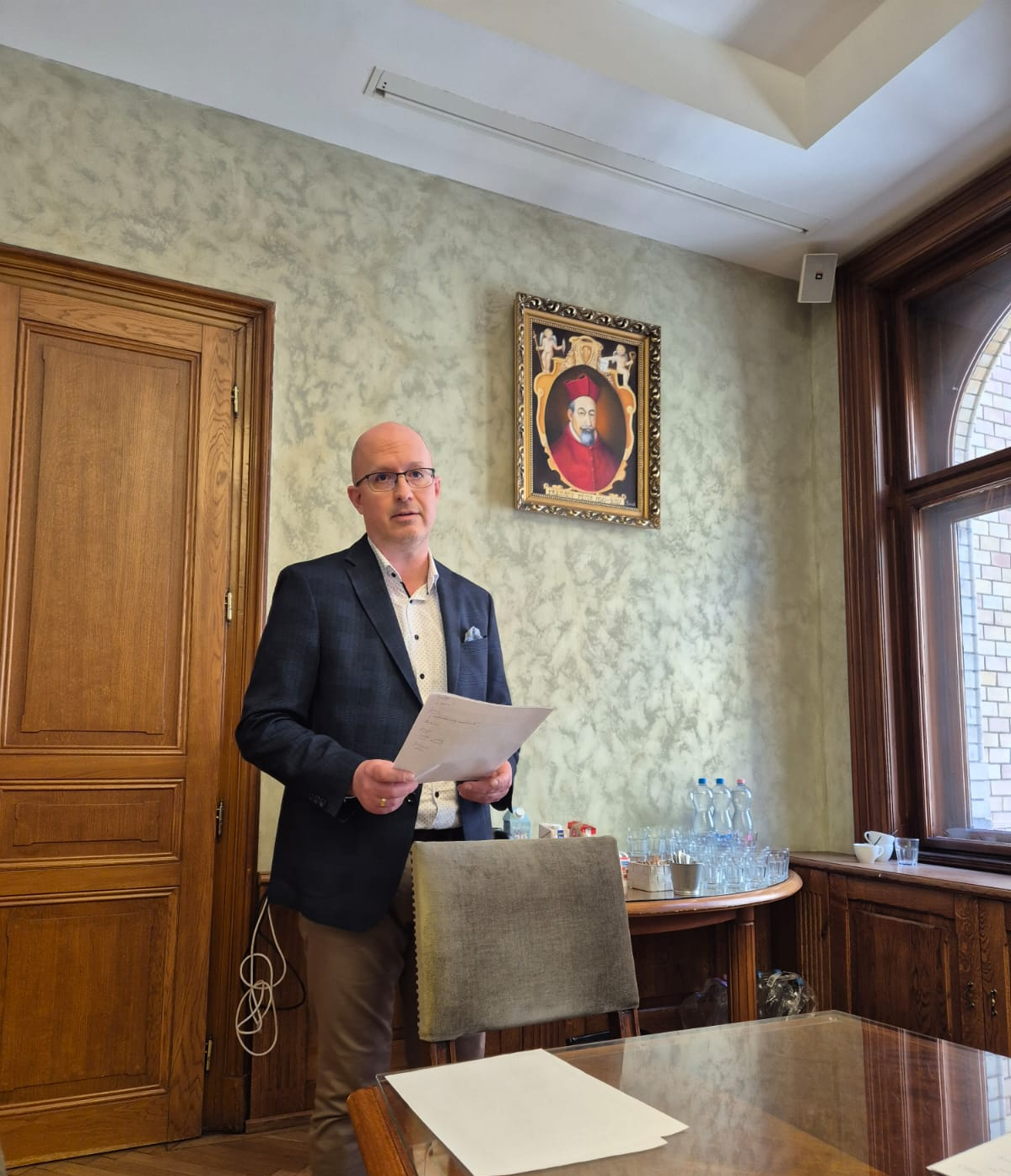
Expanding the discussion to international human rights, Clara Chapdelaine-Feliciati (Associate Professor of Law, Xi’an Jiaotong-Liverpool University) presented The Situation of the Girl Child, introducing the research behind her book The Status of the Girl Child under International Law: A Semioethic Analysis. Drawing on this work, she offered the first comprehensive legal analysis of the girl child’s status under international law, bridging the fields of law and semiotics. Applying innovative theoretical tools—such as the Significs Meaning Triad (sense, meaning, significance) and semioethics—she examined key international treaties, including the Convention on the Rights of the Child and CEDAW, to assess how effectively they recognize the girl child and address the layered challenges of sexism, childism, and intersectional discrimination. Her presentation highlighted both interpretative gaps and possibilities for reform in the language of international law.
Next, prof. Petra Láncos (Professor of European Law and Vice-Dean, Pázmány Péter Catholic University) examined The Role of a Female Perspective in International Fact-finding, emphasizing the importance of incorporating women’s experiences into international legal processes to ensure more accurate reporting — especially in fields either predominantly involving women or where women bring a distinct and indispensable perspective.
Finally, Sarolta Molnár (Associate Professor at Pázmány) reviewed the position of women in family law, emphasizing that a male-centered equality is not just and that a “gender-neutral” family law risks the error of erasing real, patterned asymmetries in reproduction, caregiving, and economic vulnerability that can reconfirm inequality.
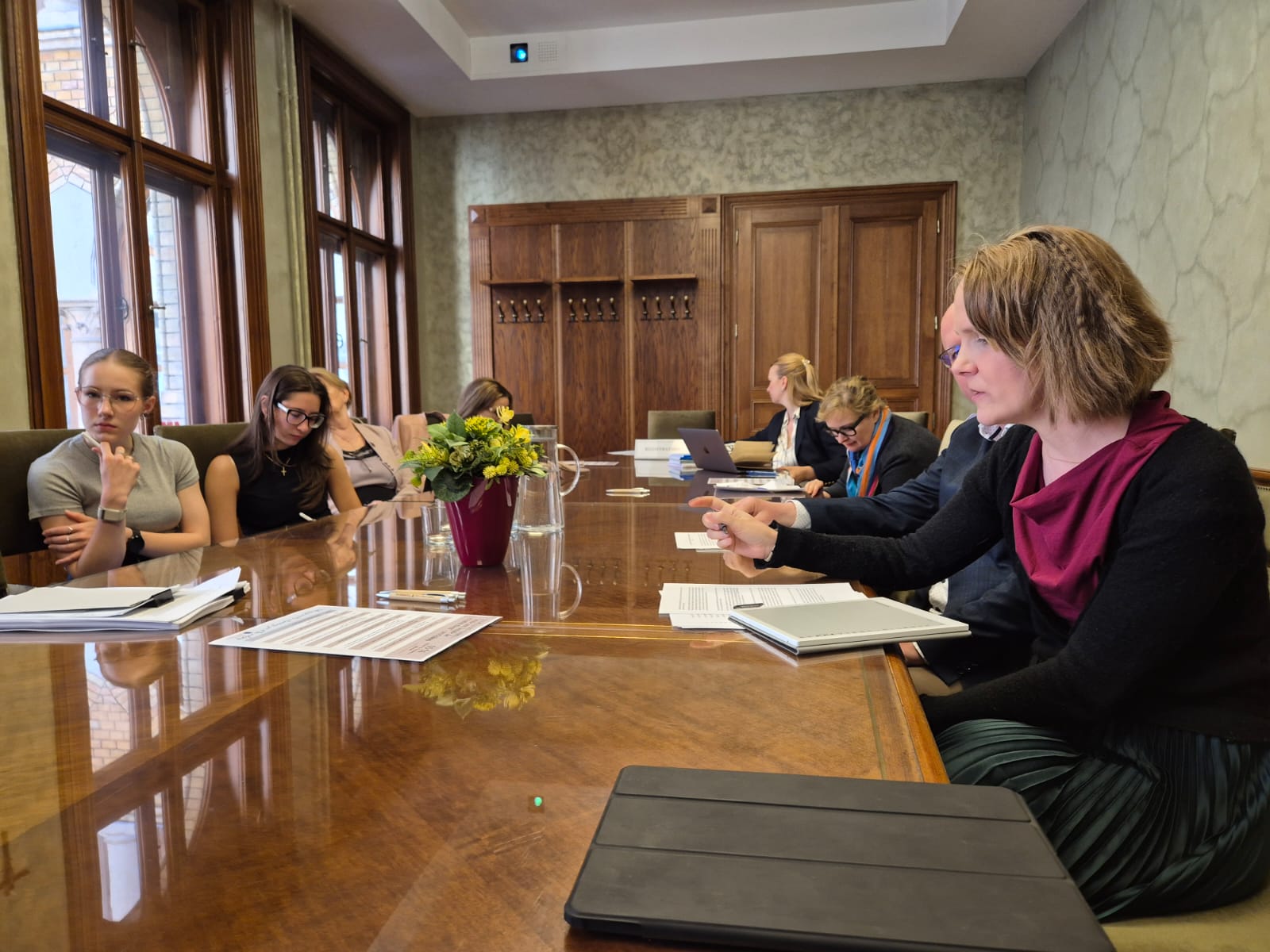
The workshop demonstrated that the core questions of the Querelle des femmes remain highly relevant: while the law must strive for equality, it must also grapple with the realities of difference. The lively discussions confirmed that integrating historical, philosophical insight with contemporary legal analysis offers valuable perspectives on how to achieve a more just and nuanced understanding of gender in law.