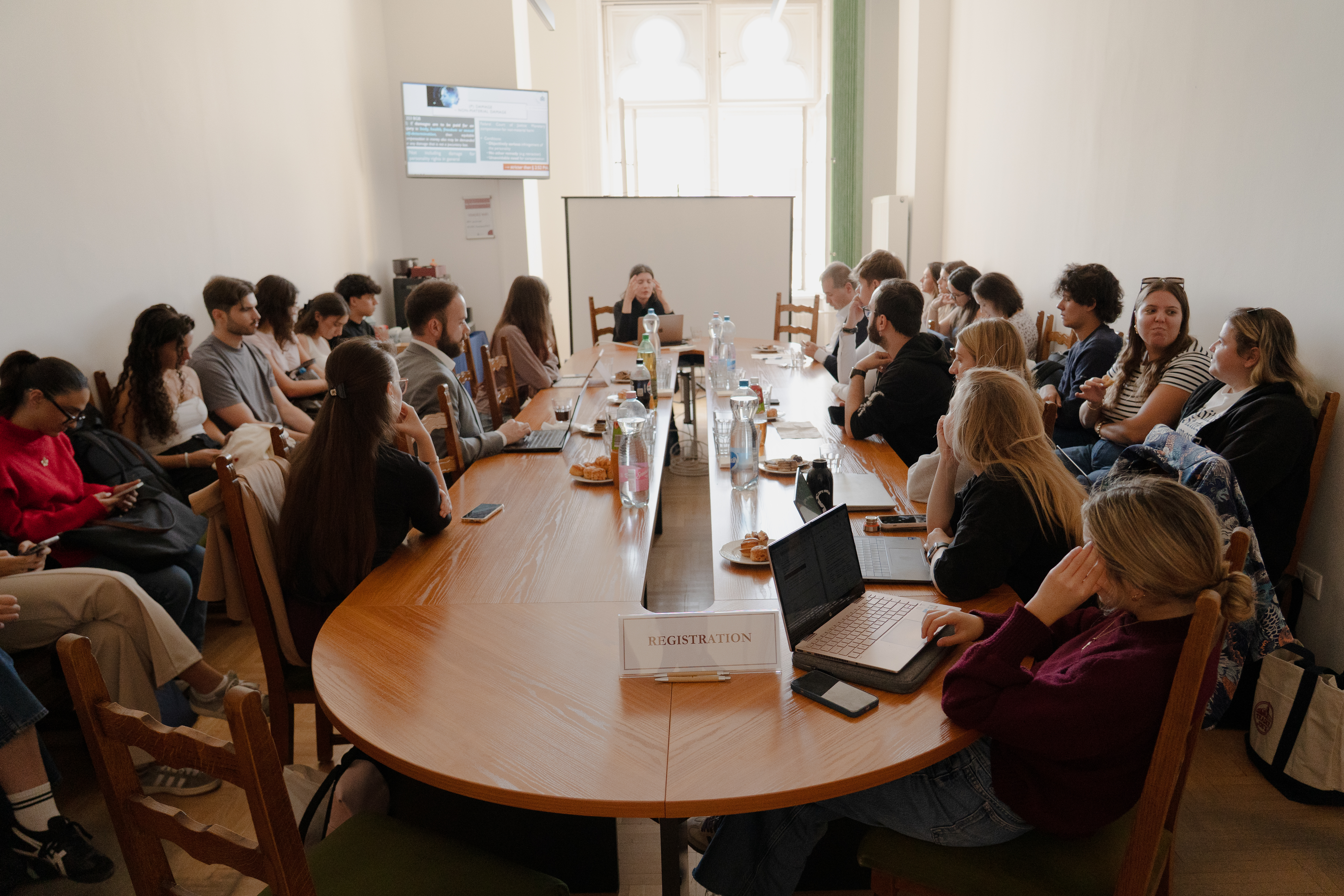
At the Lunchtime Lecture held on 7 October 2026, Dr Chiara Streitbörger (University of Potsdam) examined how German private law addresses infringements of personality rights involving artificial intelligence. She explored this question through two typical scenarios: deepfakes and the use of AI chatbots. To highlight the distinctive features of German law, she compared the German approach with the corresponding rules of the Hungarian Civil Code (Ptk.).
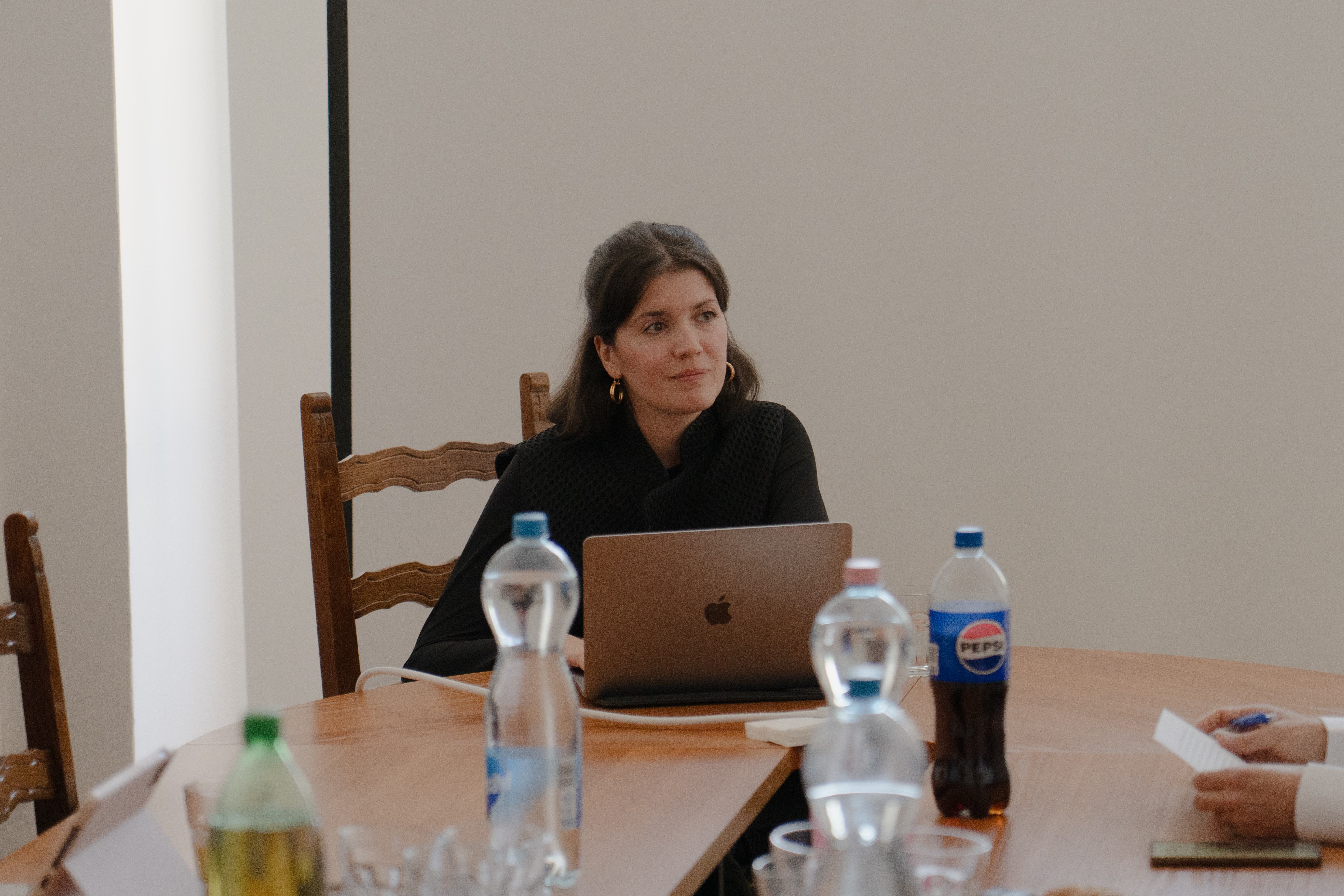
First, she outlined how personality rights are protected under German law in general. Unlike under the Ptk., this right is not codified, since it was developed by the Federal Court of Justice and is constitutionally anchored in Art. 2(1) in conjunction with Art. 1(1) German Federal Constitution.
In the first scenario involving deepfakes, the focus was on non-contractual liability (tort) claims for injunctive relief, removal and damages. Where a voice or picture is exploited commercially, these claims are supplemented by a claim for unjust enrichment, as demonstrated by the case of the AI-generated German voice of Bruce Willis’ voice actor. The principal obstacles to effective enforcement were identified as the anonymity of infringers and the liability of platforms. Disclosure claims against platforms require a court order and are costly and time-consuming. A platform’s responsibility under the German doctrine of Störerhaftung (as indirect ‘interferer’) arises only once it has been notified of an infringement, giving rise to injunctive relief rather than damages. Case law is now shifting from ‘notice-and-takedown’ to stricter duties, obliging platforms to block equivalent content after a single notice (‘notice-and-stay-down’). However, this raises concerns about over-blocking and a general monitoring obligation in practice.
The second scenario, concerning chatbots and AI companions, saw three issues take centre stage: the presumption of fault in contract law, the validity of consent to intimate self-disclosure and liability for AI-generated false statements. Since such systems are designed to encourage self-disclosure within a simulated relationship of trust, the voluntariness of consent is compromised by design. She concluded that considerable research is still needed, particularly with regard to proving fault and compensating (non-)material harm. Due to the opacity of AI systems, the affected parties have no insight into the training data or how the system functions. Restoration is also difficult since memorised data cannot be selectively removed from a model without retraining it.
The lecture was followed by a lively discussion, which focused particularly on when an AI provider is liable for its system's outputs and where that liability ends. Another focus was on the particularities of platform liability.